Ever sat down at your desk, laptop open, coffee going cold, and just… stared at the wall? You’re not lazy. Your space might just be working against you.
Good home office decorating ideas aren’t about making your room look like a Pinterest board. They’re about removing the friction between you and actually getting things done. I’ve helped a handful of friends redo their work corners over the last couple of years, and the pattern is always the same — the ones who fix their environment first end up needing far less “motivation” later. In 2026, with hybrid work now just… normal, this stuff matters more than it used to.
Let’s get into what actually works.
Why Your Home Office Setup Affects Your Focus More Than You Think
A cluttered, badly lit room doesn’t just look messy. It taxes your brain in small ways, all day long, without you noticing.
Home office decorating choices directly influence how long you can concentrate before your mind starts wandering. Poor lighting causes eye strain within 45-60 minutes of screen work, according to several ergonomics studies — and eye strain is one of the fastest ways to kill focus. Clutter does something similar. Every object your eyes land on that isn’t relevant to your task adds a tiny bit of “visual noise” your brain has to filter out.
I used to work from a corner of my bedroom with a pile of laundry visible in my peripheral vision. Didn’t think much of it at the time. Once I moved that pile out of sight (literally just closed a cupboard door), I noticed I was getting distracted less. Small thing. Real difference.
This isn’t about spending lakhs on a fancy setup. It’s about being deliberate with what surrounds you for 8+ hours a day.
Choose a Colour Palette That Matches Your Work Style
Home office decorating ideas almost always start with colour, and for good reason — colour psychology is one of the few areas of interior design backed by decent research.
Here’s a rough breakdown of what different tones tend to do:
- Blue — calming, good for detail-heavy or analytical work like accounting or coding
- Green — easy on the eyes, works well if you’re on screens all day (also just pleasant to look at)
- Yellow — energising in small doses, but can get irritating as a full wall colour
- White/neutral — a safe default, though it can feel a bit sterile without texture
If you’re renting and can’t repaint, don’t stress. A large piece of art, a patterned rug, or even coloured curtains can shift the whole mood of a room without touching the walls. I personally lean toward muted greens and warm neutrals — bright white walls make me feel like I’m sitting in a hospital waiting room, which, fair or not, is not a productive vibe.
Get the Lighting Right (This Matters More Than Furniture)
Direct answer: Natural light is best for focus and mood, but if your desk can’t face a window, use a warm-white LED desk lamp (around 4000K) positioned to your side, not directly overhead, to avoid screen glare and eye strain.
Lighting is the one area people skimp on and regret later. A single dim ceiling bulb, working alone against a bright laptop screen, creates exactly the kind of contrast that gives you a headache by 4 pm.
A few practical fixes:
- Position your desk perpendicular to a window if you can — facing it directly causes glare, facing away from it means your back blocks the light
- Add a task lamp even if the room has good overhead lighting; task lighting reduces eye fatigue during long stretches of reading or writing
- Avoid cool blue-white bulbs (6500K+) in the evening — they mess with your sleep cycle if you’re working late
Fairy lights look nice on Instagram. They do almost nothing for actual visibility. Use them as an accent, not your main light source.
Pick Furniture That Supports Your Body, Not Just Your Aesthetic
This is the section people love to skip, and it’s the one that costs them the most in the long run.
A ₹3,000 plastic chair might look fine in photos, but after three hours your lower back will disagree. Home office decorating has to include ergonomics, or it’s just decoration.
What to prioritise, roughly in order:
- A chair with lumbar support — even a cushion strapped to a cheap chair helps
- A desk at the right height (elbows at roughly 90 degrees when typing)
- Monitor at eye level, or close to it, to avoid neck strain
I’ll be honest — I resisted buying a proper chair for almost a year because the good ones felt overpriced. Then I got one secondhand for a fraction of retail, and within a week my afternoon slump noticeably eased up. Not saying it’s magic. Just saying furniture isn’t purely a style decision.
[link to related guide on ergonomic desk setups here]
Add Plants — But Choose the Right Ones
Direct answer: Low-maintenance plants like the money plant, snake plant, or ZZ plant improve indoor air quality and reduce visible stress in workspaces, making them ideal for home offices in India where AC-heavy rooms often have dry air.
There’s actual research behind this one — NASA’s old Clean Air Study found several common houseplants can filter indoor air pollutants. Whether that translates to “10% more productivity” like some blog posts claim? Probably an exaggeration. But plants do make a room feel less like a box, and that alone helps.
Good options for Indian homes and offices:
- Money plant — grows in water or soil, nearly impossible to kill
- Snake plant — thrives on neglect, tolerates low light
- ZZ plant — similar deal, very forgiving
- Areca palm — bigger statement piece if you have floor space
Skip anything that needs daily attention unless you genuinely enjoy plant care. A dying plant on your desk is worse for morale than no plant at all.
Organise Your Desk Around “Zones,” Not Just Objects
Most people arrange their desk by what they own. Try arranging it by what you actually do.
Split your desk mentally into zones — a primary work zone (laptop, keyboard, mouse), a reference zone (notebook, pen, maybe a second monitor), and a “everything else” zone that’s physically separate, even if it’s just a small tray. This sounds fussy but it genuinely cuts down on the mid-task scramble of “where did I put that pen.”
A few things that make zoning easier:
- Cable trays or clips (visible cables are a huge source of visual clutter)
- A small drawer unit instead of loose desktop storage
- One tray for “active” papers, one folder for “later”
Picture a small business owner running her boutique’s accounts from a home office in Jaipur — invoices, GST paperwork, fabric swatches, all competing for desk space. Without zones, that desk turns chaotic within a week. With them, even a small 3×3 foot desk stays workable.
Use Wall Space for Motivation, Not Just Decoration
Blank walls are wasted opportunity, but randomly pinned motivational quotes usually just become invisible wallpaper after week two.
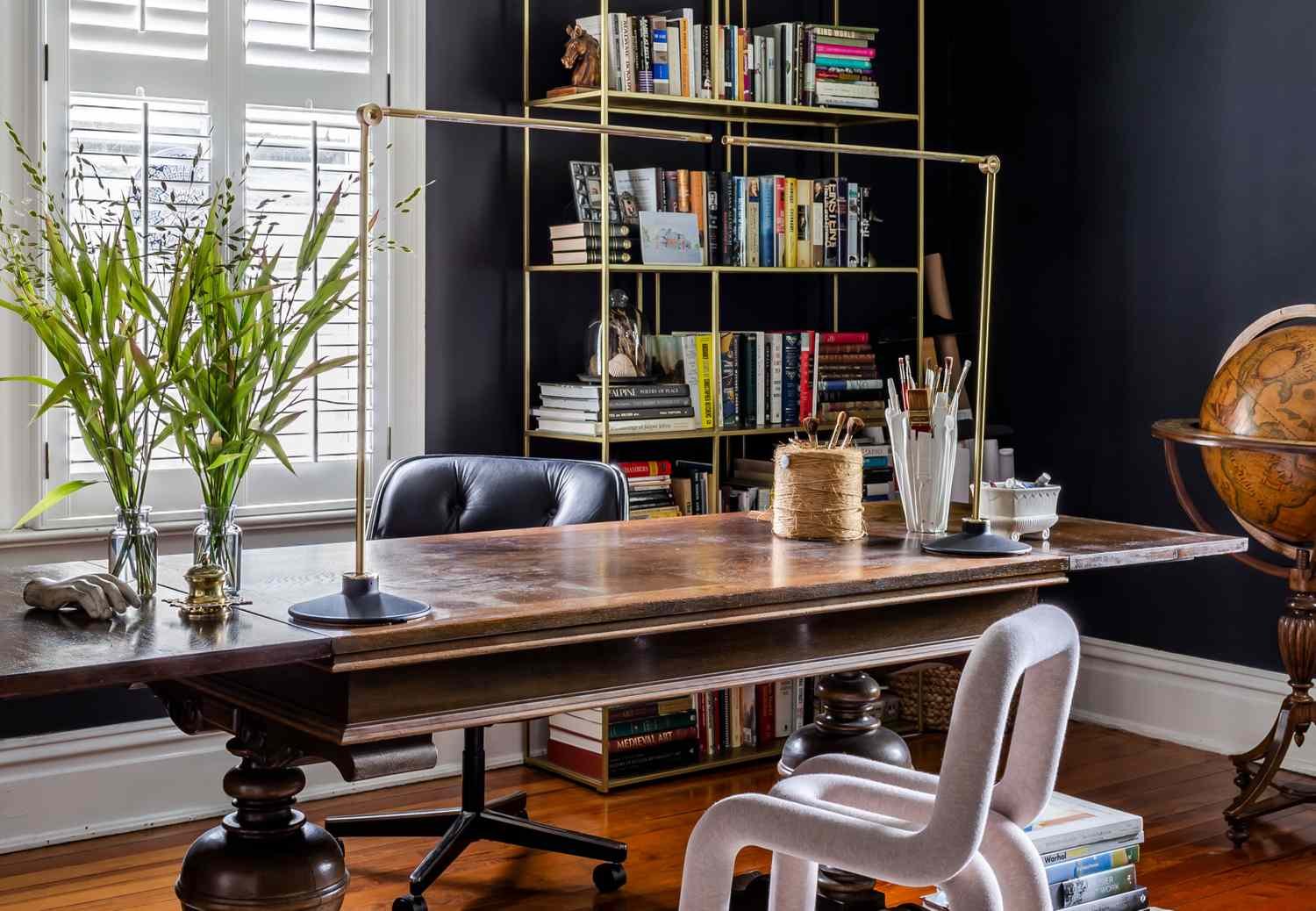
Better home office decorating ideas for walls include a whiteboard or corkboard for active projects, a calendar you actually update, or a single large piece of art that you genuinely like looking at — not something you bought because it seemed “office appropriate.”
Some options worth trying:
- A goals whiteboard, updated weekly (not just once and forgotten)
- Framed personal photos — research on workplace personalisation suggests it can reduce stress, though don’t overdo it
- A world map or city print if you deal with clients or teams in different locations
- Open shelving with books you’ll actually reference
Avoid covering every inch. A wall with breathing room feels calmer than one crammed with stuff, even if each individual item is nice on its own.
Control Noise and Sound the Way You Control Light
We talk a lot about visual clutter and forget audio clutter is just as disruptive.
If you live in a busy household or a noisy street-facing flat (common in a lot of Indian apartments), sound can undo all your other home office decorating efforts pretty fast. A heavy curtain absorbs more street noise than people expect — it’s not just for blocking light. A rug does something similar for footstep echo and general room noise.
Cheap fixes that actually work:
- Thick curtains or blinds, even on windows that don’t need blocking for light
- A rug under the desk, especially on tile or marble flooring
- Foam panels behind your monitor if you’re on video calls often (also improves how you sound to others)
- Noise-cancelling headphones as a last resort, not a first one — treating the room helps everyone in the house, not just you
Has the sound of someone’s TV three rooms away ever completely derailed your focus? Yeah. Me too. It’s a bigger deal than people give it credit for.
Personalise It Without Turning It Into a Distraction
There’s a balance between “this room says nothing about me” and “this room has forty objects competing for my attention.”
Pick a handful of things that genuinely matter to you — a photo, a plant, a piece of art, a small object from somewhere you travelled — and give them dedicated spots. Not fifteen things crammed on one shelf.
I’ve noticed the people whose home offices feel the calmest usually have less stuff, not more. They’re selective. Their space says something about them, but it doesn’t shout.
[link to related guide on small-space home office ideas here]
Frequently Asked Questions
What colours are best for a home office to improve focus? Muted blues and greens tend to work well for concentration-heavy tasks, while warm neutrals feel calm without being boring. Avoid stark white if you’re in the room all day — it can feel a bit clinical after a while.
How can I decorate a small home office on a budget? Focus on lighting and a comfortable chair first — those affect your body directly. After that, a plant, a rug, and one piece of wall art go a long way without needing a full furniture overhaul.
Do plants really help with productivity in a home office? They help indirectly. Plants improve air quality slightly and make a space feel less sterile, which reduces low-level stress. Don’t expect a dramatic productivity jump, just a more pleasant place to sit for hours.
Should my desk face a window or a wall? Perpendicular to the window is usually best. Facing it directly causes glare on your screen; facing away means you lose natural light and end up squinting at a bright rectangle all day.
How do I stop my home office from feeling cluttered? Zone your desk by function — active work, reference materials, everything else — and keep only what you’re using this week within reach. Everything else goes in a drawer or another room.
Is it worth spending extra on an ergonomic chair for a home office? Generally, yes, if you’re working 6+ hours a day. A decent secondhand ergonomic chair often beats a brand-new budget one. Your back will thank you within a week.
Final Thoughts
Getting your home office decorating right isn’t about a single big purchase or a weekend makeover. It’s lighting, it’s your chair, it’s the plant you remember to water, it’s the wall you look at fifty times a day without noticing. Small changes, stacked together, add up to a room that actually helps you work instead of quietly working against you.
Start with just one thing this week — move your desk away from the glare, or finally get that lumbar cushion you’ve been putting off. See how it feels before you touch anything else.