Ever read the back of your bathroom cleaner and had no clue what half the ingredients even are? Same here. That’s actually what got me experimenting with natural cleaning products DIY recipes a few years back — partly out of curiosity, partly because my toddler kept crawling around on floors I’d just sprayed with something that smelled like a chemistry lab. Turns out, most of what you need to clean a house is already sitting in your kitchen cabinet.
This isn’t some extreme, throw-out-all-your-cleaners manifesto. It’s a practical look at which homemade swaps actually work, which ones are honestly overhyped, and how to mix them safely. In 2026, with vinegar, baking soda, and lemons costing a fraction of branded cleaners, this is as much about your wallet as it is about your health.
Why Bother With Natural Cleaning Products DIY?
Featured Answer: Homemade cleaning products cut down on synthetic fragrances and harsh chemicals like ammonia, reduce plastic bottle waste, and typically cost 60-70% less than store-bought equivalents. They’re not always more powerful, but for everyday cleaning, they hold up surprisingly well.
There are a few real reasons people switch, and it’s not just trendiness:
- Cost — a 1-litre bottle of white vinegar runs about ₹80-100 and lasts weeks; a branded glass cleaner of similar volume can cost double that
- Fewer synthetic fragrances, which matter if anyone in the house has asthma or sensitive skin
- Less plastic waste piling up under your sink
- You actually know what’s in the bottle — no guessing games with ingredient lists
I’ll be honest though — natural doesn’t automatically mean better for every single job. Stubborn grease on an old stove, for instance, sometimes still needs something stronger. This is about smart swaps, not a total overhaul.
The Core Ingredients Every DIY Cleaning Kit Needs
You don’t need twenty ingredients. Five, maybe six, cover almost everything.
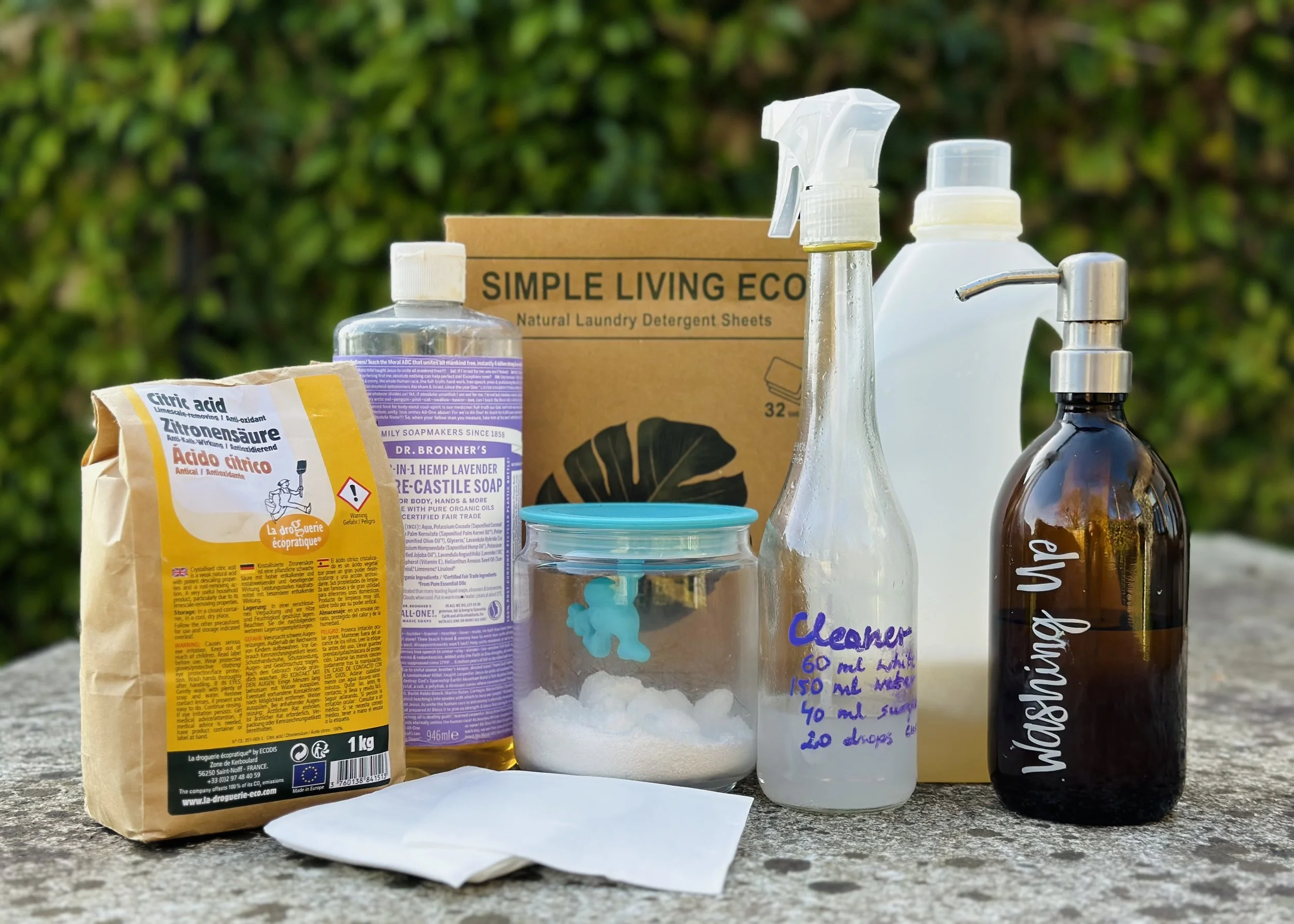
- White vinegar — the real workhorse for natural cleaning products DIY, cuts grease and mineral deposits
- Baking soda — mild abrasive, great for scrubbing and odor control
- Lemons (or citric acid powder) — natural degreaser, smells better than vinegar alone
- Castile soap or a mild liquid soap — the base for most multi-surface sprays
- Essential oils — optional, but tea tree and eucalyptus add a mild antibacterial boost and mask the vinegar smell
- Rubbing alcohol (isopropyl) — useful for glass and quick-disinfecting spot cleans
Keep these in one shelf or a small caddy near your kitchen sink. Half the battle with DIY cleaning is just having ingredients within arm’s reach when you actually feel like cleaning.
[Link to related guide on building a minimalist cleaning caddy here]
All-Purpose Cleaner: The One Recipe You’ll Use Daily
This is genuinely the recipe I make most often, hands down.
Featured Answer: A basic all-purpose natural cleaning product DIY spray combines equal parts water and white vinegar with a few drops of essential oil. It works well on countertops, sinks, and most non-porous surfaces, though it should be avoided on natural stone like marble or granite.
What you need:
- 1 cup water
- 1 cup white vinegar
- 10-15 drops essential oil (lemon or lavender work nicely)
- A spray bottle (reuse an old one, no need to buy new)
Mix, shake, done. Takes about ninety seconds. Use it on kitchen counters, sinks, and most hard surfaces — just skip marble or granite countertops, since the acid in vinegar can dull the finish over time. That’s one mistake I made early on with a rented flat that had marble flooring in the kitchen. Lesson learned.
Glass and Mirror Cleaner Without the Streaks
Streaky mirrors are one of those small annoyances that make an otherwise clean bathroom look off.
Recipe:
- 2 cups water
- ½ cup white vinegar
- 2 tablespoons rubbing alcohol
- 1-2 drops dish soap (cuts through fingerprints faster)
Spray lightly and wipe with a microfiber cloth or old newspaper — yes, newspaper still works better than most people expect, mainly because it doesn’t leave lint behind like paper towels sometimes do.
Baking Soda Scrub for Bathrooms and Sinks
Some jobs need a bit of grit, not just liquid. That’s where baking soda earns its place among natural cleaning products DIY recipes.
Sprinkle baking soda directly onto a damp sponge or the surface itself — bathroom sinks, tubs, stovetops with baked-on grime. Let it sit for 5 minutes, scrub in small circles, rinse. For extra cutting power on tough stains, sprinkle baking soda first, then spray vinegar over it. It’ll fizz (kids genuinely love watching this part), and that reaction helps lift stuck-on residue.
A word of caution: don’t premix vinegar and baking soda in a sealed bottle. It’ll just neutralize into salty water and lose most of its cleaning punch. Use them in sequence, not combined ahead of time.
Floor Cleaner That Won’t Damage Wood or Tile
Floors take a beating, especially in Indian homes where outdoor dust tracks in constantly.
For tile floors:
- ½ cup white vinegar
- 1 bucket (about 4 litres) warm water
- A few drops of essential oil for scent
For wooden or laminate floors, skip the vinegar altogether — it can dull the finish with repeated use. Instead:
- Use a barely damp microfiber mop
- A small amount of mild castile soap diluted heavily in water
- Dry the floor immediately after mopping to avoid water damage
I’ve noticed a lot of DIY cleaning blogs recommend vinegar for every floor type, and honestly, that’s not great advice for wood. Ask any furniture polisher in your area — they’ll tell you the same thing.
Natural Degreaser for Stovetops and Kitchen Exhaust
Grease is the one area where I’ll admit natural cleaning products DIY solutions sometimes fall short against really heavy, baked-on buildup. But for regular maintenance, this works well:
- 2 tablespoons baking soda
- 1 tablespoon liquid castile soap
- Warm water to form a paste
- A squeeze of lemon juice
Apply the paste to the greasy surface, let it sit 10 minutes, then scrub with a scrub pad. For the exhaust fan or chimney filter — a genuine trouble spot in most Indian kitchens — soak the filter in hot water with a few tablespoons of baking soda and dish soap for 20-30 minutes before scrubbing.
Toilet Cleaner That Actually Disinfects
Featured Answer: A natural toilet cleaner made from baking soda, vinegar, and a few drops of tea tree oil can effectively clean and deodorize toilets. Tea tree oil has documented antimicrobial properties, making it a reasonable natural substitute for harsher commercial disinfectants in everyday use.
Recipe:
- Sprinkle ½ cup baking soda around the toilet bowl
- Add 1 cup white vinegar
- Let it fizz and sit for 10 minutes
- Add 5-6 drops tea tree oil, scrub with a toilet brush, flush
This won’t replace a hospital-grade disinfectant if someone in the house is dealing with an illness — for that, stick to your regular disinfectant. But for weekly maintenance cleaning? It genuinely does the job well.
Air Freshener Without the Aerosol Chemicals
Store-bought air fresheners often just mask smells rather than dealing with them. A simmer pot does something different — it actually fills the room with a real, warm scent.
Simple stovetop simmer pot:
- A pot of water on low flame
- A few cinnamon sticks or cardamom pods
- Orange or lemon peels
- A few cloves
Let it simmer gently for 20-30 minutes. Works especially well before guests arrive, honestly — it beats any spray can by a mile. [Link to related guide on quick house cleaning tips before guests arrive here]
For a spray version, mix 1 cup water with 2 tablespoons vodka or rubbing alcohol (helps the scent disperse) and 15-20 drops of your favorite essential oil.
Suggested image alt text: “homemade natural cleaning spray bottle with lemon and vinegar ingredients on kitchen counter” Suggested image alt text: “baking soda and vinegar fizzing reaction for natural bathroom scrub” Suggested image alt text: “DIY cleaning caddy with essential oils, castile soap, and reusable spray bottles”
FAQs About Natural Cleaning Products DIY
Are homemade natural cleaning products as effective as store-bought ones? For everyday cleaning — counters, sinks, glass, floors — yes, they hold up well. For heavy-duty jobs like baked-on grease or mold that’s been there a while, commercial products sometimes still win. It really depends on the job.
Can I mix vinegar and baking soda together for cleaning? You can, but not in a sealed container — the fizzing reaction neutralizes both into a mild saltwater solution, which loses most of its cleaning strength. Use baking soda first, then spray vinegar directly on top for the fizz-scrub effect.
Is vinegar safe on all surfaces? No, and this trips people up a lot. Avoid vinegar on marble, granite, and other natural stone surfaces since the acid can etch and dull the finish over time. It’s also not great for hardwood floors with a waxed finish.
How long do homemade cleaning sprays last before they go bad? Vinegar-based sprays without added water can last several months. Once you add water or fresh ingredients like lemon juice, use it within 1-2 weeks and store in the fridge if it contains fresh citrus.
Do natural cleaning products actually disinfect, or just clean? Some do have mild antimicrobial properties — vinegar, tea tree oil, and rubbing alcohol among them — but they’re not a substitute for hospital-grade disinfectants when you genuinely need to kill viruses or bacteria, like during an illness in the house.
What’s the cheapest way to start making natural cleaning products at home? Start with just vinegar, baking soda, and an old spray bottle. That combination alone covers about 70% of regular household cleaning needs and costs a fraction of what a shelf full of branded cleaners would.
Conclusion
Making your own natural cleaning products DIY-style isn’t about being perfect or ditching every commercial product overnight. It’s about swapping the everyday stuff — glass cleaner, all-purpose spray, toilet scrub — with versions that are cheaper, gentler, and honestly just as effective for regular upkeep.
Start small. Mix up one bottle of the all-purpose vinegar spray this weekend and see how it handles your kitchen counters. If it works for you the way it’s worked for me, you’ll probably find yourself slowly replacing the rest of that cleaning cabinet, one bottle at a time.