Most backyard inspiration you find online assumes you’ve got a sprawling lawn and a budget to match. Reality’s usually different — a narrow strip behind the house, maybe 80-150 square feet, with an odd corner or a water tank taking up space nobody thought about when the house was built. That’s exactly where good small backyard garden ideas matter most, because working with limited space actually needs more planning, not less.
I redesigned my own backyard in Pune a couple of years back — barely 120 square feet, shaped more like an L than a rectangle, with a drainage pipe running right through the middle of it. It took three failed attempts before it actually looked like something I wanted to sit in. In 2026, with urban plots shrinking and balcony gardens becoming the norm, knowing how to make a small backyard genuinely functional (not just pretty in photos) matters more than ever. Here’s what I’ve learned works.
Start With What You Actually Use the Space For
Featured Answer: Before choosing plants or furniture for a small backyard garden, decide its primary purpose — morning tea spot, kids’ play area, or a mini vegetable patch. Small spaces can’t do everything well at once, so picking one or two core functions prevents the design from feeling cluttered or half-finished.
This sounds obvious, but skipping it is the single biggest reason small backyard designs fail.
- If it’s mainly for relaxing, prioritize seating and shade over planting beds
- If kids will use it regularly, keep a clear open patch of ground and avoid delicate plants near play areas
- If you want a kitchen garden, be honest about how much daily maintenance you’ll realistically manage
I’ve noticed people try to cram in a seating corner, a vegetable patch, AND a play area into 100 square feet, and it ends up looking chaotic rather than charming. Pick a priority. The rest can be secondary, smaller touches.
Use Vertical Space Instead of Fighting for Floor Space
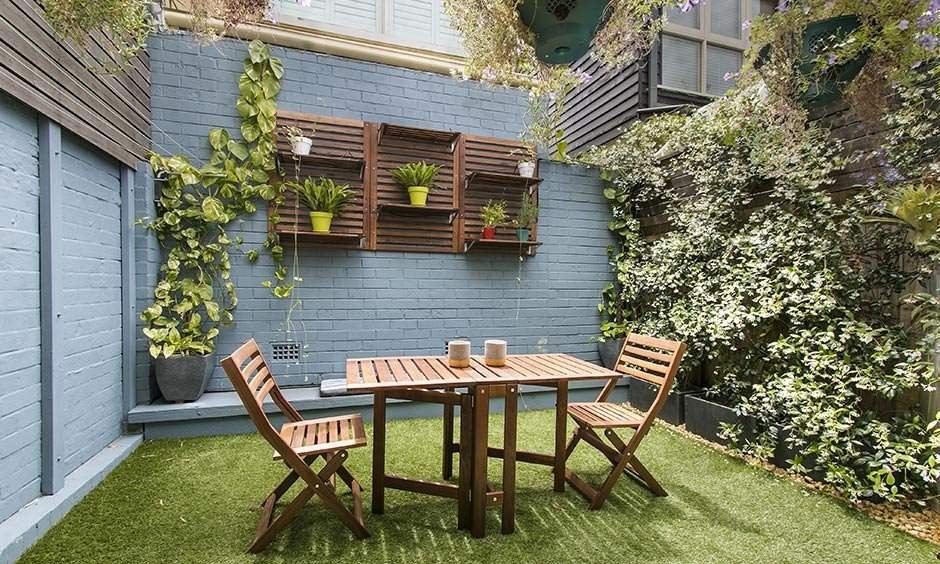
Featured Answer: Vertical gardening — wall-mounted planters, trellises, and hanging pots — is one of the most effective small backyard garden ideas because it adds greenery without eating into limited floor area. A single wall can hold 15-20 potted plants using tiered shelving or a simple grid trellis.
Floor space in a small backyard is basically your most valuable resource, so stop putting everything on the ground.
- Install a wall-mounted trellis for climbers like money plant, jasmine, or morning glory
- Use tiered plant stands — three shelves can hold what would otherwise need three times the floor area
- Hang pots from a pergola beam or an overhead frame if your backyard has one
Picture a small business owner in Jaipur who runs a home bakery and wanted a pretty backdrop for customer photos without losing any actual seating space. A single vertical wall of potted herbs and flowering plants did exactly that — filled the space visually without eating into the two tables she needed for customers.
Pick a Focal Point, Don’t Spread Attention Thin
Every good small garden has one thing your eye lands on first. Without it, the space just feels like scattered pots and plants with no direction.
- A single small tree (like a dwarf frangipani or a potted lemon tree) works well as a natural focal point
- A water feature, even a small tabletop fountain, adds movement and sound to an otherwise static space
- A statement pot — one large, well-chosen planter — can anchor an entire corner on its own
Has this ever happened to you — walked into a backyard that had “everything” but somehow felt like nothing in particular? That’s usually a focal point problem, not a plant problem.
Choose Multi-Functional Furniture
Space is tight, so furniture needs to work harder than it would in a bigger yard.
- A bench with storage underneath doubles as seating and a place to stash gardening tools
- Foldable chairs save space when you’re not actually using the backyard
- A low wooden deck or platform can double as both seating and a slightly raised plant display area
- Built-in seating along a boundary wall saves more floor space than standalone chairs ever will
Avoid oversized outdoor sofas or large dining sets in anything under 150 square feet — I’ve seen this mistake made constantly, and it just makes the whole space feel cramped rather than cozy.
Work With Your Backyard’s Actual Shape, Not Against It
Most small backyards aren’t neat rectangles. Mine certainly wasn’t, and pretending otherwise just makes the design harder than it needs to be.
- L-shaped yards — use the shorter arm as a dedicated seating nook, keep the longer stretch for planting or a walking path
- Narrow, long yards — break the length visually with different zones (a gravel patch, then a small lawn, then a seating corner) rather than one continuous stretch
- Yards with an odd fixture (water tank, electrical box, drainage pipe) — screen it with tall potted plants or a simple bamboo screen instead of trying to design around pretending it’s not there
Trying to force a small, oddly shaped backyard into a Pinterest-perfect rectangular layout is honestly a waste of time. Work with the shape you’ve actually got.
[Link to related guide on best plants for a beginner’s garden here]
Use Gravel, Pebbles, or Paving Instead of Grass Everywhere
Grass in a small backyard often looks patchy fast, especially with limited sun or heavy foot traffic, and mowing a tiny irregular patch is more hassle than it’s worth.
- Gravel paths or patches need zero mowing and drain well during monsoon season
- Interlocking pavers create a clean, low-maintenance base for seating areas
- A small patch of artificial turf works surprisingly well if you want the “lawn” look without the upkeep
I’ll admit a mild disagreement with a lot of garden blogs here — real grass gets recommended constantly for backyards, but in a genuinely small, shaded space, it often just turns patchy and sad within a season. Gravel or paving combined with pots of greenery usually looks better and needs a fraction of the effort.
Add Lighting to Extend Usable Hours
A small backyard that only works during the day is honestly half a backyard. Lighting changes that completely.
- String lights along a boundary wall or pergola beam — cheap, effective, and easy to install yourself
- Solar-powered garden stake lights along a path add a soft glow without any wiring hassle
- A single warm-toned lantern or lamp near the seating area does more for ambiance than you’d expect
[Link to related guide on quick house cleaning tips before guests arrive here]
Evening use matters a lot in Indian cities where daytime heat for much of the year makes backyards genuinely uncomfortable until sunset. Design for evenings, not just daylight photos.
Keep Maintenance Realistic for the Space You Have
This is the part most design guides skip, and it’s honestly the most important one long-term.
- Choose drought-tolerant plants if you know you won’t water daily — succulents, aloe, and marigold are solid low-maintenance choices
- Limit lawn or grass patches to what you’re genuinely willing to mow regularly
- Group plants with similar watering needs together, so you’re not overwatering some while underwatering others
A gorgeous backyard design that dies within two months because the upkeep didn’t match your actual schedule isn’t really a win. Design for the person you actually are, not the aspirational version who waters plants daily without fail.
Suggested image alt text: “small L-shaped backyard garden with vertical wall planters and seating nook” Suggested image alt text: “gravel pathway with potted plants in a compact backyard design” Suggested image alt text: “string lights and lantern lighting up a small backyard seating area in the evening”
FAQs About Small Backyard Garden Ideas
How small is too small for a backyard garden? There’s really no minimum — even a 50-60 square foot space can work well with vertical planting, a couple of pots, and simple seating. The design approach just needs to scale down with the space, focusing on one or two functions instead of trying to fit everything.
What’s the cheapest way to design a small backyard? Start with what you already have — repurpose old containers as planters, use gravel instead of paving (it’s significantly cheaper), and add string lights rather than expensive fixtures. A basic small backyard refresh can realistically be done for under ₹8,000-10,000 depending on plant choices.
Do I need grass in a small backyard garden? Not at all, and in many small or shaded spaces, grass actually performs poorly. Gravel, pavers, or a small patch of artificial turf often look better and need far less upkeep.
How do I make a small backyard feel bigger than it is? Vertical gardening helps a lot, since it draws the eye upward instead of just across a small floor area. Light-colored paving, a single well-placed mirror on a boundary wall, and keeping clutter minimal all contribute too.
What plants work best in a small backyard with limited sunlight? Ferns, money plant, spider plant, and certain hostas tolerate shade reasonably well. If there’s at least partial sun for a few hours, marigold and low-growing succulents can still work in the brighter pockets.
How often should I redesign or update a small backyard garden? There’s no fixed schedule, but most people naturally refresh plant arrangements every 6-12 months as plants grow or seasons change. Structural elements like paving, seating, or trellises usually last several years without needing changes.
Conclusion
A great small backyard doesn’t need more space — it needs a clearer plan. Decide what the space is actually for, use vertical gardening to save floor area, pick one solid focal point, and design lighting and maintenance around how you’ll genuinely use it, not some idealized version of it.
Take a proper look at your backyard this weekend — actually walk it, measure the odd corners, note where the sun hits longest. Start with just one section using these small backyard garden ideas, and build outward from there. Small spaces reward patience a lot more than big budgets do.